As a kid, I read Aesop’s fables. I found most of them depressing, but there is one story that sticks out in my memory: the tale of the fox and the grapes. You’re probably familiar with it, but here’s a summary just in case:
A hungry fox one day notices some delicious-looking grapes hanging overhead. He does everything he can to reach them: he jumps, climbs, and stretches with all his might. When he fails after every single attempt, he stalks off, muttering, “I’m sure they were bitter, anyway.”
Today, “bitter grapes” is shorthand for the resentment and attitude of fake indifference someone gets when they fail to get something they want. We all try hard to achieve nice things, and we all fail at some point. Popular wisdom tells us to keep trying, but sometimes the grapes are just too high. When this happens, popular wisdom pivots and says, “It wasn’t meant to be. You’re destined for something even better!”
But are we? How can we tell the difference between bitter grapes — or any post hoc rationalization — and genuine gladness that our lives turned out differently?
I’ll use an example from my own life.
As a teen and early twenty-something, I had grandiose ambitions of a literary career. My role model was Zadie Smith, the brilliant British novelist who wrote her first bestseller at age 21 and went to Cambridge University. I wanted to be like Zadie.
Maybe I didn’t try as hard as the fox, but I did spend hours on Cambridge’s website, scheming and thinking about how I could rise from an obscure existence in Arizona to be somehow accepted into one of the most famous universities in the world. Meanwhile, my profuse writing efforts never led to anything more complete than a short story.
In the end? I instead attended two relatively obscure liberal arts colleges, met amazing people, studied under wonderful professors, and continued to write in my spare time. I was later accepted into grad school, but it wasn’t Cambridge — it was the University of Arizona. After putting my acceptance letter on the fridge and admiring it for some time, I took it down, threw it away, and went to live and work in South Korea.
Now back to Aesop:
My hopes and dreams today are very different from the ones I had almost 20 years ago. Status and prestigious achievements are less interesting to me than working really hard at something I have a lot more control over. But is this really my inner wisdom speaking, or is this the folly of the fox and the grapes?
Keep this question in mind as I turn to another story: the pre-Socratic philosopher turned one-time businessman, Thales of Miletus.
Here is the story of Thales, as told by Aristotle:
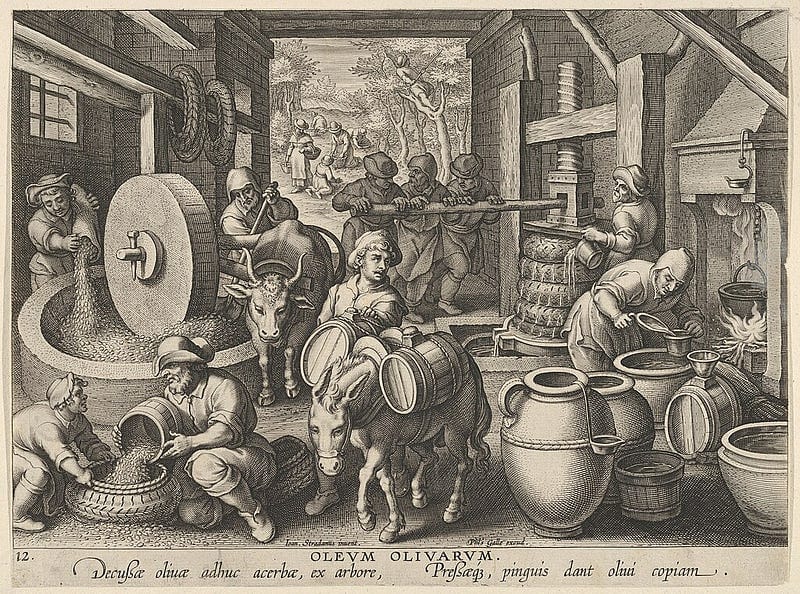
Thales, so the story goes, because of his poverty was taunted with the uselessness of philosophy; but from his knowledge of astronomy he had observed while it was still winter that there was going to be a large crop of olives, so he raised a small sum of money and paid round deposits for the whole of the olive-presses in Miletus and Chios, which he hired at a low rent as nobody was running him up; and when the season arrived, there was a sudden demand for a number of presses at the same time, and by letting them out on what terms he liked he realized a large sum of money, so proving that it is easy for philosophers to be rich if they choose, but this is not what they care about. (Emphasis mine). 1
Two things jump out to me: first, I am skeptical that Thales could so easily use his erudite learning to make a ton of money. Wouldn’t word get out that studying the stars led to successful get-rich-quick schemes? Does astronomy predict bumper crops? I doubt this story is meant to be taken literally.
Second, I find it interesting that Thales felt compelled to “prove” he could accomplish the things he didn’t care about. Wouldn’t a true philosopher resist the temptation to care what other people think? There’s something almost smug about the idea that Thales didn’t need to make money, but he did anyway.
Michel de Montaigne and Nassim Nicholas Taleb are also skeptical about the Thales olive oil story. Taleb writes:
Montaigne sees the Thales episode as a story of immunity to sour grapes: you need to know whether you do not like the pursuit of money and wealth because you genuinely do not like it, or because you are rationalizing your inability to be successful at it with the argument that wealth is not a good thing because it is bad for one’s digestive system or disturbing for one’s sleep or other such arguments. (Emphasis mine). 2
In other words, Thales had to prove it to himself and to others that he really didn’t care about money. And if he had failed, he never could have known for sure where his heart was. He couldn’t have called his own bluff.
So to return to my youthful aspirations to be like Zadie Smith: today I no longer wish for a life of fame and intellectual achievement (and haven’t for a long time), but is that my sincere desire — or is that Aesop’s bitter grapes at work? By contrast, I thought I wanted to attend graduate school at U of A, and I was accepted, but only then did I tear the letter up, realizing it wasn’t what I wanted after all — but I felt satisfied knowing that I could have chosen it.
In the second case, it’s clear that I passed the “bitter grapes test”: I sought a desirable opportunity, achieved it, and then decided to pass on it. But what about in the first case? The more ambitious we are, the more things we are going to fail at in the process of striving— that’s just how life works. Is it really “for the best” when those lofty dreams fail to take flight, or is that just a story we tell ourselves to protect us from a much harsher truth: we just aren’t good enough.
You might reply: “Your shifting priorities aren’t bitter grapes — that’s just what happens over time. Your values change. You change. You don’t always know what will make you happy.” And you’re probably right. Perhaps we can both rationalize our happiness with how our lives turned out and be completely sincere in that happiness.
But the riddle of the bitter grapes is a good self-evaluation exercise. We don’t need to be rich, popular, admired, etc. to know that we don’t care about those things, but it’s hard to be certain if we haven’t experienced them, or at least a peripheral taste of the life they entail.
And after all, experience is life’s best teacher.
***
Read Next: Why Bronze Medalists Are Happier →