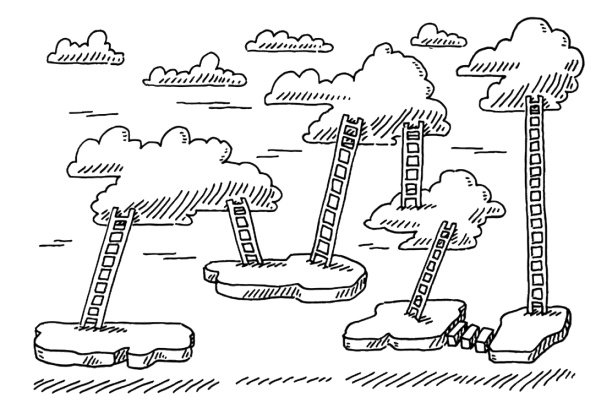
Almost everything we do is perfect. When we first dream it up, that is.
Then we take a stab at it and humiliation ensues. It’s true for almost anything: art, sports, relationships, even the chicken curry you cobble together for a weeknight dinner. The obvious culprits are our flawed mortal brains and bodies. It doesn’t occur to us that our imaginations, as incredible as they are, might share just as much of the blame.
Nor is this a bad thing. The gap between imagination and reality is a rugged wilderness; if we want something badly enough, we must be willing to cross it to close that gap. And not everyone is.
Struggle and imagination: A necessary pair
“If” is a word unique to humans.
This is the source of much (if not most) of our anxiety. My dog is asleep in her daybed next to me as I write this; one glance at her is an enviable reminder of how she lives only in the moment, never worrying or wondering what will happen next or comprehending that anything could be different than it is.
For that same reason, my dog will also never write the next Pulitzer Prize-winning novel or bestselling fantasy series. She can’t conceive of something that does not yet exist but could. This is the trade-off we make for being “enlightened”: we’re excited, even thrilled by what’s possible, and we’re discouraged and disillusioned when it fails to materialize.
The only hope to taming anxiety and coming anywhere close to appeasing our imaginations is through honest, patient struggle. Alain de Botton, the gentle sage of the 21st century puts it this way:
“No one is able to produce a great work of art without experience, nor achieve a worldly position immediately, nor be a great lover at the first attempt; and in the interval between initial failure and subsequent success, in the gap between who we wish one day to be and who we are at present, must come pain, anxiety, envy and humiliation. We suffer because we cannot spontaneously master the ingredients of fulfilment.” 1
A perfect example of this comes from American writer James Lord. In his book A Giacometti Portrait, he recounts his experience sitting for his portrait by the great Swiss painter and sculptor Alberto Giacometti. Portrait-sitting sounds like a quiet enough activity, but Giacometti wasn’t a quiet artist.
During their many sessions together, Giacometti vented his angst, frustration, and occasional rage over failing to paint Lord’s portrait exactly how he wanted to. Lord notes:
“This fundamental contradiction, arising from the hopeless discrepancy between conception and realization, is at the root of all artistic creation, and it helps explain the anguish that seems to be an unavoidable component of that experience.” 2

_2019.jpg)
Then Lord makes a profound claim:
Harmony between Giacometti’s imagination and reality, he says, “was of course impossible, because what is essentially abstract can never be made concrete without altering its essence.”
In other words, when we create something, it will inevitably be a new and different thing from what we imagined. The book, the painting, the recipe, the relationship, the job…whether it’s better or worse, it won’t be what we’d had in our minds. And that’s okay.
Our imagination produces wonderful thoughts and dreams, but without physical form they are mere chimeras. The struggle to create something out of them is much more fulfilling than to live in a fantasy.
I can see why this terrifies so many would-be creators; I’ve experienced it plenty of times, even during casual conversations when I couldn’t summon words for the thought in my head. Our imaginations are less of a connect-the-dots picture waiting to be formed, and more of a diving board off which we must jump. We can only create by swimming.
But there is a positive side: the new thing can be far better than we’d imagined, or at least more complex and whole.
Our imaginations produce wonderful thoughts and dreams, but without physical form, they are mere chimeras. The struggle to create something out of them is much more fulfilling than to live in a fantasy.
Imperfectly realized is better than perfectly imagined
If there is one thing that plagues us in the digital age, it’s the allergy we’ve developed to any kind of struggle. At the first sign of discomfort, we reach for the nearest source of dopamine: food, music, LED screens.
These habits take the edge off everyday stress, but we pay a high price if we do them too often or for too long. Our dreams, deprived of time and attention, will wither and die. Our potential will remain unknown.
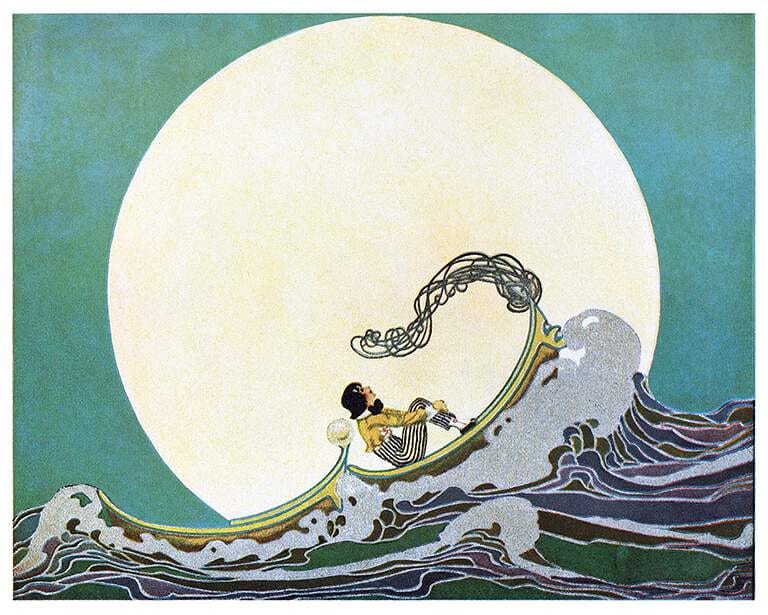
Holocaust survivor Viktor Frankl was far more familiar with struggle and discomfort than most of us will ever have to be; he learned to survive by embracing the struggle rather than minimizing it:
“What man actually needs is not a tensionless state but rather the striving and struggling for some goal worthy of him. What he needs is not the discharge of tension at any cost, but the call of a potential meaning waiting to be fulfilled by him.” 3
The next time you feel the canvas or computer screen is mocking you, ask yourself if what you seek to accomplish is worthy of you. If it is, it won’t come easily. It shouldn’t.
As wonderful and important as imagination is, we can learn create, and achieve far greater things than our imaginations alone. It takes effort, experimentation, discovery — and yes, struggle — to create anything worth being proud of. In her sharply observed book, The Creative Habit choreographer Twyla Tharp notes: “Errors accumulate in the sketch and compound in the model. But better an imperfect dome in Florence than cathedrals in the clouds.” 4
Perfection does not exist in real life. Not in a measurable, literal sense. But in the struggle to create something worth sharing and doing, we are transformed in ways even we could not have imagined.
***
Read Next: How to Become Who You Are →