
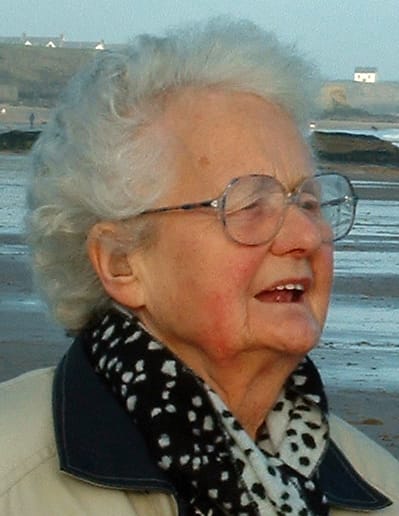
In the 1950s, the philosopher Mary Midgley submitted a script to the BBC, “Rings and Books.” In it, she called out a fact hiding in plain sight: most of the household names in Western philosophy are bachelors. 1
“In case you doubt that, here are some figures,” Midgley announces. Here is her list:
Plato
Plotinus
Bacon
Descartes
Spinoza
Leibniz
Hobbes
Locke
Berkeley
Hume
Kant
Midgley neglects to add Kierkegaard, Schopenhauer, and Nietzsche who also fit the bill. Her point wasn’t to criticize bachelorhood, but to question what this pattern might reveal: Have the solitary lives of these thinkers shaped our philosophical beliefs about “the good life” in ways we don’t realize?
Do loner types who’ve never been pregnant, changed a diaper, or taken care of an aging parent understand reality better than everyone else? We need solitude for a rich inner life, but abstraction is not the same thing as wisdom. If your “alone time” has never been interrupted by someone else’s urgent needs (especially at 3 AM), you might come to believe that autonomy, reason, and detachment are the highest goods. Are they?
Midgley suggests that a wider range of life experiences offers us deeper insight into the human condition. The BBC, however, rejected her essay as “too much concerned with domestic matters.” I’m sure the irony wasn’t lost on her.
“Rings and Books” is ripe for debate about culture and gender, but I’m more interested in a practical question all of this raises: How much solitude do we need to be self-actualized? Are our social duties — especially to spouses, kids, and other dependents — a complement to our inner lives, or are they a distraction?
Let’s get something obvious out of the way: Plato, Kant, and all these other “bachelors” weren’t ordinary people. Many of them dedicated their lives to advancing ideas the way a scientist dedicates sixty hours a week to curing an autoimmune disease. It was their job.
However, being a philosopher is not as formally defined as, say, being a physicist or a doctor. This is no defect of philosophy; it’s in its very definition, “love of wisdom,” as a unifying pursuit. In fact, Socrates – the OG of the Western philosophical tradition – didn’t leave behind a single written word and spent his days wandering barefoot around the marketplace talking with people (he was also married with kids).
Philosophy is about life itself. It’s for all of us. This is why Midgley’s observation matters to anyone who wants to live an examined life.
We all need solitude — but do we need responsibilities?
The question is tricky because we all need some degree of solitude and independence if we want to be original thinkers.
“Philosophers,” Midgley says, “above all need to concentrate…The objection to [an active family life] lies in certain obstacles which it puts in the way of intellectual development.”
She continues:
“Because independent thought is so difficult, the philosophic adolescent (even more than other adolescents) withdraws himself from the influences around him to develop ideas in harmony with his own personality. This is necessary if the personality is to be formed at all. But once it is formed, most people recoil towards experience, and attempt to bring their strengthened self to terms with the rich confusion from which it fled. Marriage, which is a willing acceptance of the genuinely and lastingly strange, is typical of this revulsion. The great philosophers did not return. Their thoughts, unlike yours and mine, had powers enough to keep them gazing into the pool of solitude.”
As someone who’s been married over a decade, I can verify the need to accept the “lasting strangeness” and “rich confusion” of a life tied to another person. A happy marriage is less about finding someone just like you and more about learning to love and accept someone very different from you with needs of their own. And if marriage doesn’t pry your gaze from the pool of solitude, children certainly will. (I can also verify this).
If you’re single with no children, keep in mind that caretaking, mentoring, volunteering, being a therapist, and many other vocations have a similar effect. Teachers, social workers, caregivers, and others sacrifice, labor, and serve in a messy world with little financial compensation or time for personal pursuits.
As Midgley points out, once we’ve developed our “strengthened self,” we can handle the complicated world of people and relationships. But what happens to our intellectual growth after that? Are we doomed to be stunted, forever dragged down by mundane responsibilities? Most of us in the individualistic West understand the need for personal development; we also see the value in family and nurturing relationships, but many of us shirk from the idea of “responsibility.”
So do we need both?
Maybe it depends.
Anthony Storr, a 20th-century-century psychotherapist, had this to say about the solitary lives of the great thinkers:
“Would they have been happier if they had been able, or more inclined, to seek personal fulfilment in love rather than their work? It is impossible to say. What should be emphasized is that mankind would be infinitely the poorer if such men of genius were unable to flourish, and we must therefore consider that their traits of personality, as well as their high intelligence, are biologically adaptive. The psychopathology of such men is no more than an exaggeration of traits which can be found in all of us. We all need to find some order in the world, to make some sense out of our existence.” 2
Storr’s explanation reminds me of the famous inscription of the Delphic oracle: “Know thyself.” Personality, pathologies, abilities, disabilities, experiences, values — all of these incline us in one direction or the other. The great philosophers didn’t necessarily choose their path because it was superior or because they thought it so, but because it made the most sense for them.
But as for more ordinary people like you and me, I don’t see why we must choose between the two. Family and social ties — provided they are healthy — are not only not at odds with a life of contemplation, they have the power to enhance it. Thinking, reading, writing, wandering the woods: these are wonderful outlets for learning about the world and who we are. But so is time spent working and playing alongside other human beings of all ages. Done right, they balance each other.
One obvious reason a lot of us quail at the word “duty” or “responsibility” is that caretakers are often burdened. They don’t always have the support they need to make time for personal development, though in theory it shouldn’t have to be that way. A life free of commitment can sound appealing because it’s, well, freer. And simpler.
But there is another reason that I suspect holds a lot of influence: that old dichotomy of the “contemplative life” versus the “active life.”
The active versus contemplative life: A false choice?
The idea of the contemplative life first emerges in Aristotle’s Nicomachean Ethics. Aristotle concludes that contemplation is the most “godlike” activity we can engage in, and thus it’s the ultimate goal to achieve eudaimonia — a flourishing life. “And for a human being, this is the life that accords with the intellect,” he writes. “This life, therefore, is also the happiest.” 3
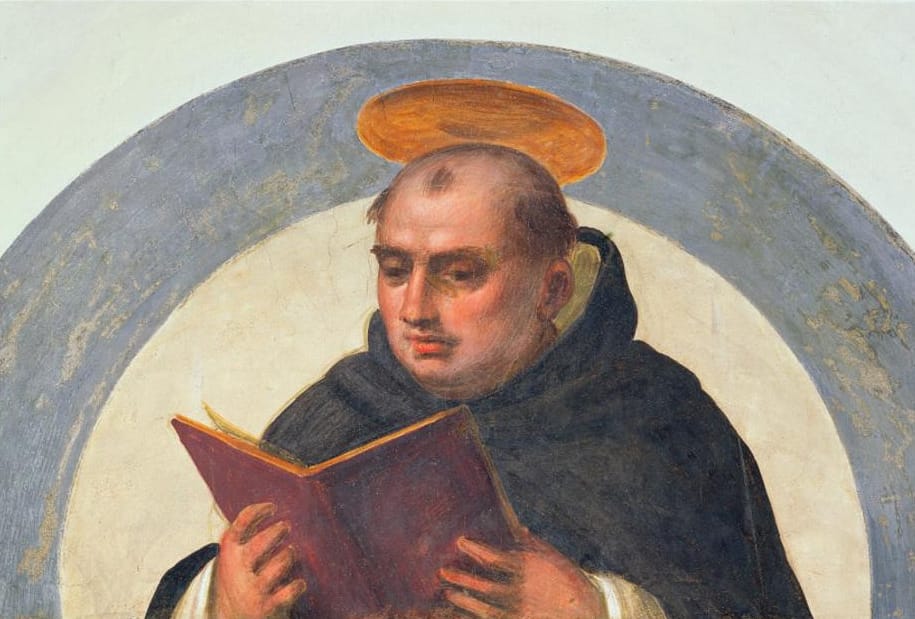
What’s interesting is that Aristotle does not say anywhere that contemplation is at odds with family duties or social life — in fact, an active civic and family life is a vital part of eudaimonia. (Although male citizens in 4th-century Athens had an arguably unfair advantage.) By the Middle Ages, however, “Via Activa” and “Via Contemplativa” were very separate lifestyles. Saint Thomas Aquinas, the towering authority of the 13th century, made it clear in his Summa Theologica that the life of contemplation was superior.
The call of the contemplative life has followed us into the modern era. Montaigne, the inventor of the essay, often cloistered himself in a tower on his estate, surrounded by books. Kant followed such a strict schedule of study, solitude, and daily walks that the residents of Königsberg were said to set their watches by him.
Perhaps one of the most extreme examples is 19th-century Danish philosopher Søren Kierkegaard, who abruptly broke his engagement with Regine Olsen to live an ascetic life with his books and journals, never marrying and also never recovering from his broken heart (she also never got over him). It’s possible we wouldn’t have Fear and Trembling or The Concept of Anxiety if Kierkegaard hadn’t lived a life of solitude, but even if so, he paid a steep price.
Spouses, children, parents, students, siblings, therapy clients: these people remind us that we’re different from them. Those differences force us to examine ourselves.
All of these “psychopathological” examples, as Anthony Storr mentioned, probably chose their life paths because they knew themselves and they knew what they wanted. But the dichotomy of an “active life” versus a “contemplative life” creates unnecessary confusion for the rest of us. A mother’s intellectual growth isn’t doomed by her children — she certainly has challenges, but she also has advantages thanks to her hard-won perspective. On the other hand, reclusive bookworms are mistaken if they think the most valuable life truths they can learn are in a book or a podcast episode. Most of us won’t have to choose between the two.
The world is our laboratory for testing out ideas that come to us and for gathering new ideas we can bring back to our dens of solitude. Time alone to reflect and time spent with others — including intense, intimate, chaotic, extended time — is complementary to our understanding of the world. Spouses, children, parents, students, siblings, therapy clients: these people remind us that we’re different from them. Those differences force us to examine ourselves.
The famous Western philosophers may have led lives that were mostly solitary, even eccentric, but that doesn’t mean we need to be like them to be original thinkers. And we should be careful to rationalize how we spend our days: a Kierkegaard may be productive with a life of intensely independent solitude, but few of us are Kierkegaard. There’s a difference between a life of minimal social obligation because you are furiously writing and working on world-changing ideas, and a life spent all day on the Internet. And those two can seem more similar than they are.
It’s important to gaze into the pool of solitude long enough and often enough to nurture our personal growth. The key is to know when to pull away, and of course, not to fall in and drown.
***
Read Next: The Right Way to Live with Regret and Anxiety →
Footnotes
- Harris, Malcolm. “Rings and Books.” Raven Magazine, Johns Hopkins University, 12 Mar. 2024, https://ravenmagazine.org/magazine/rings-books/.
- Storr, A. (2015). Solitude: A Return to the Self. Free Press.
- Aristotle. Nicomachean Ethics. Translated by Robert C. Bartlett and Susan D. Collins. University of Chicago Press, 2012.