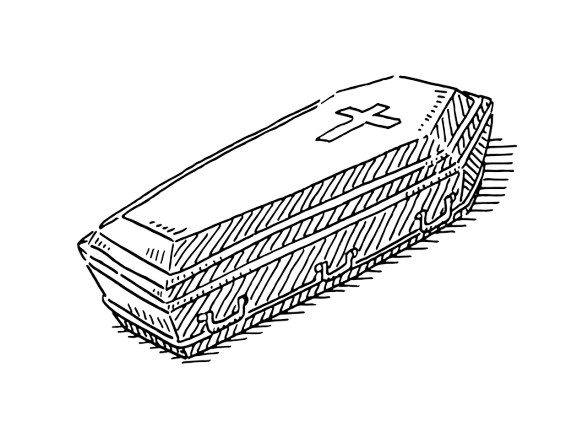
Imagine that you are given the chance to become a vampire.
All of your friends and family have taken the leap. All of them are vampires: they absolutely love it and have zero regrets. They tell you, “You should join us! You can even drink animal blood to avoid harming humans. You get to be immortal and you don’t even have to be bitten — you can become a vampire painlessly, in an instant. There’s no downside.”
Except.
How can you be sure you’ll be happy as a vampire? It’s an irreversible decision. Even if you know you’ll be happy, it means you won’t be a human anymore. You’ll be someone else. Something else. You will be giving up a part of your identity, and you can never go back to who you were before.
The “Vampire Problem” is a thought experiment by philosophy professor L.A. Paul. While vampires thankfully aren’t real (unless you count those squashy-faced bats), we face similar dilemmas in real life. Should you have a child or stay child-free? Should you relinquish your country’s citizenship for a new one? Should you sacrifice the next 10 years of your life to become a brain surgeon?
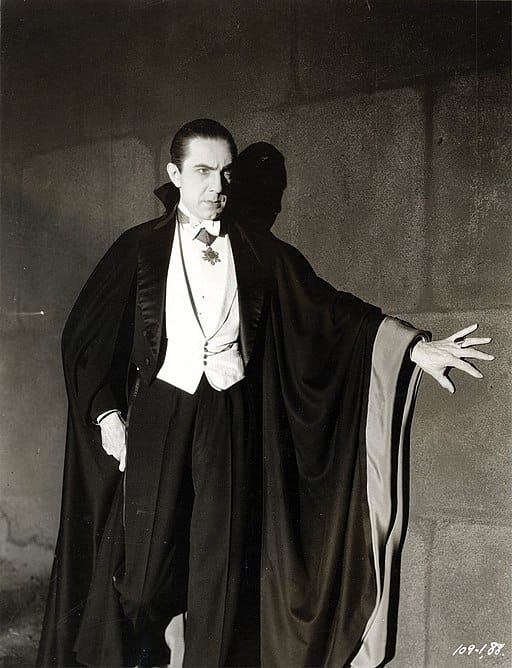
Some of these decisions are more dramatic than others. A few — like having a child — are all or nothing. Going to med school, on the other hand, is a progression of events. However, the problem in all of these cases is that we can’t know how we’ll feel until after we’ve followed through with the decision. As Paul puts it: “When we face a choice like this, we can’t know what our lives will be like until we’ve undergone the new experience, but if we don’t undergo the experience, we won’t know what we are missing.”
It’s a Catch-22: how on earth are we supposed to choose?
Wormholes and ice cream: why we’re not as special as we think
Here is one possible solution:
We can obtain relevant experience to get “an idea” of what we’re getting into. But the problem is, doing something similar isn’t the same as doing the actual thing. As Paul points out:
You might try to learn about what it is like to be a vampire by gracefully gliding around in a black cloak, staying up all night, sleeping in a coffin during the day, and drinking the blood of chickens. But while this might teach you about what it is like for a human to do these things, it doesn’t give you information about what it would be like for you to do these things as a vampire. 1
Or, to use a real-life analogy:
Babysitting your best friend’s kid isn’t the same thing as becoming a parent. You know what it’s like to take care of that kid, but you don’t know what it would be like caring for your own — and unless you foster or adopt, you can’t meet your future child before you decide to become their parent.
At this point, many of us will resort to a solution that’s far easier and more appealing: our imaginations. Or as psychologist Daniel Gilbert memorably puts it, “the poor man’s wormhole.” Since we can’t time-travel to meet our future selves and see how happy they are, we have to settle for imagining how our future selves feel after making the Big Life Decision.
Unfortunately, our imaginations are third-rate fortune tellers. It’s comforting to run simulations in our brains, but we are surprisingly bad at knowing how events and choices will make us feel in the long run. Not to worry, though! There is a solution, Gilbert proposes, that’s hiding in plain sight:
But if we cannot travel in the dimension of time, we can travel in the dimensions of space, and the chances are pretty good that somewhere in those other three dimensions there is another human being who is actually experiencing the future event that we are merely talking about. Surely we aren’t the first people to ever consider a move to Cincinnati, a career in hotel management, another helping of rhubarb pie, or an extramarital affair, and for the most part, those who have already tried these things are more than willing to tell us about them. 2
This solution is both easy and simple: most people are happy to tell you about themselves and the choices they’ve made if you just ask. So why are so many of us uninterested in relying on other people when we’re trying to make a Big Life Decision?
There are several reasons, Gilbert argues; one of the biggest is the fact that we tend to think we’re more special and unique than we really are. We think other people’s feelings and experiences don’t apply to us. But if we are willing to let go of this notion, we’re much more likely to make better decisions — and just as importantly, not worry or overthink those decisions.
Not convinced? Gilbert uses several studies to prove this point, including one that involves a favorite food of mine: ice cream. 3
One group (A) first got an ice cream gift certificate, then afterward had to do a dull computer task; later, they reported how they felt. Another group (B) was told in advance what would happen and asked to predict how they’d feel at the end. A third group wasn’t told what the prize would be — only that they’d get some prize — and was instead shown one of group A’s reports.
The results? Group B, relying only on imagination, got it wrong. They thought the excitement of ice cream would carry them through, but it wore off once they did the mind-numbing task. Group C, who simply copied what someone else had actually felt, was far more accurate.
The big takeaway is that it makes a lot more sense for us to rely on other people’s lived experiences than to try to predict for ourselves. Thinking about having a kid? Ask someone who’s already had a kid. Are you sure you want to quit your corporate job and backpack across Europe? Try to find someone who’s already done it.
Gilbert suggests that making these Big Life Decisions is not as much of an existential problem as we think — because we aren’t as different from each other as we think. And in its own cynical way, that’s a relief.
Who do you want to become?
“Now hold on,” you might be wondering, just as I did. “Something’s not quite right. I understand why it makes sense to rely on others’ experiences for things like eating ice cream, but does this really apply to profound choices like having a child or becoming a Zen monk? I’m not convinced.”
Our friend L.A. Paul might agree. “I will not argue that you can’t get information from the testimony of others when you make such choices. You can,” she writes in her book Transformative Experience. “But…such guidance only goes so far, for the information such sources can supply is incomplete.” And this, she argues, is because humans are so complex and different from each other. 4
Now we’re back at square one of the Vampire Problem. If our imaginations are shoddy, if quasi-similar experiences aren’t reliable, and advice from other people is insufficient, what options are we left with? Paul has an intriguingly simple solution: it comes down to deciding whether — and how — you want to discover who you will become.
I’ve faced the Vampire Problem several times in my life, but by far the biggest decision was whether or not to have a child (#2 was deciding whether or not to marry my now-husband). I deliberated for years. I really liked the idea of being a parent, but there were so many variables out of my control. I had no idea what personality or temperament my child would have. There was no way to know how healthy or able-bodied they would be. There wasn’t even a 100% guarantee that either of us would survive the pregnancy.
And that was only half of it. Besides not knowing who my child would be, I didn’t know who I would become. I was well aware that pregnancy alters your brain.5 I knew that beyond changing my lifestyle, it would change parts of my identity and even some of my values. I knew I would be a different person, but it was impossible to know in what way. All of this was, frankly, a little terrifying.
Hope and curiosity won out, however. I was lucky enough to then give birth to my daughter, whom I now can’t imagine living without — even though I existed very happily for 35 years before she came along. I can’t say that it was a “rational” decision because it involved too many unknowns, and therefore, I can’t give replicable advice to other people who are wondering if they should have kids. I only know that for me, the desire to discover who I would become as a parent was greater than my doubt.
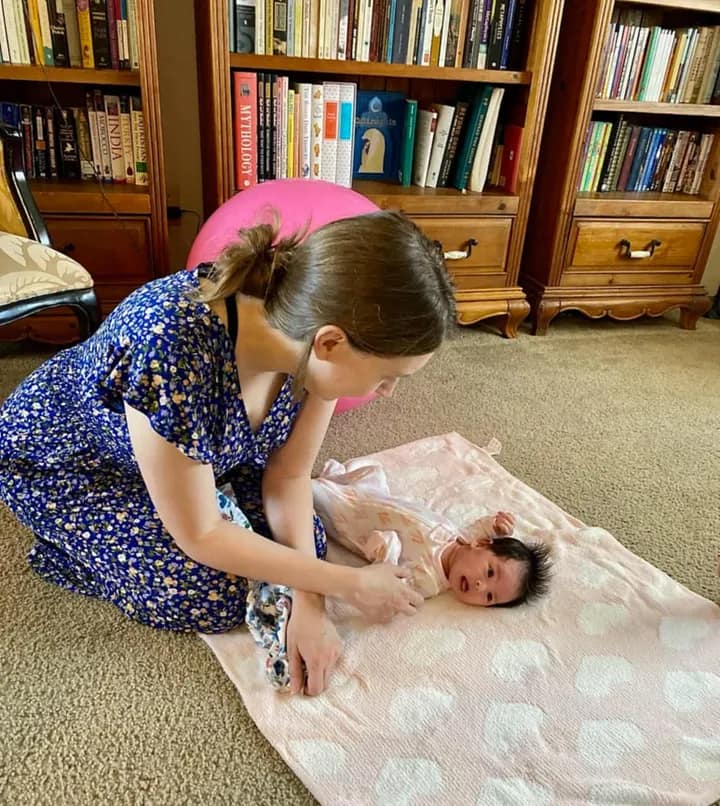
Not having a child is also a decision that will lead you to discover who you will become, even if it doesn’t happen as abruptly. No choice is neutral; even a failure to decide one way or the other is a choice. Luckily, not all decisions in life are equally impactful, and so our solutions to the Vampire Problem may vary based on the type of choice we’re dealing with.
In the end, I think both Gilbert and Paul have a valid point. In Gilbert’s defense, too many of us see ourselves as unique and special to the exclusion of all else. And there is wisdom to be found in the experience of others, especially when you survey a larger pool. It may be unwise to choose which grad school to attend based on just your cranky uncle Tim’s advice — but if you ask 10 other people, you might get a helpful answer. Even if that answer is, “It doesn’t matter.”
But for the most difficult, emotional decisions of all, we can’t just look outward — we must look inward. Paul’s advice to choose based on “whether and how you want to discover who you will become” can help us make that choice more clearly, even if the terrifying uncertainty doesn’t go away.
Anaïs Nin once wrote, “Life shrinks or expands in proportion to one’s courage.” It’s hard for anyone to say whether a choice is right or wrong when multiple factors are out of our control. But it seems clear, at least to me, that a life based on choices that are made out of courage and resolve is a life that, in the end, will feel the most satisfying and bring us the most peace of mind.
***
Read Next: You Will Never “Find” Yourself →
Footnotes
- Paul, L. A. (2016). Transformative experience. Oxford University Press.
- Gilbert, Daniel Todd. Stumbling on Happiness. Kindle ed., Vintage, 2 May 2006.
- These are unpublished studies but the results are described in Stumbling Upon Happiness, by Gilbert.
- From Transformative Experience.
- Pritschet, L., Taylor, C. M., Cossio, D., Faskowitz, J., Santander, T., Handwerker, D. A., Grotzinger, H., Layher, E., Chrastil, E. R., & Jacobs, E. G. (2024). Neuroanatomical changes observed over the course of a human pregnancy. Nature Neuroscience, 27(12), 2253–2260. https://doi.org/10.1038/s41593-024-01741-0