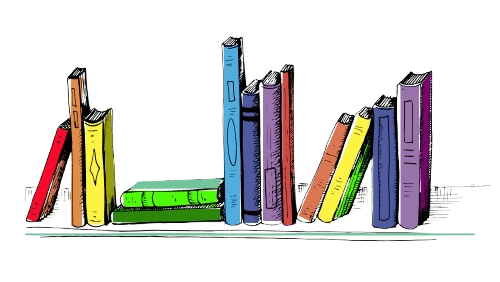
In my living room are three cabinets, all filled with books. They are the only real conversation piece in my home, if you don’t count my dog. People notice it when they enter, not (I’m guessing), because they are particularly beautiful, but because they draw the eye. Rows of books of different colors and sizes have a way of doing that. More than one guest has asked me, “So, how many of these have you read?”
This question used to make me sheepish. A lot of these books I’ve had since high school, and some are even older (including several “I-Spy” books that I can’t quite bring myself to part with). You would think I’ve read almost all of them but the honest answer is, I’m not sure it’s even half. For much of my life, I looked at books — and travel destinations and other experiences — as feats to undertake. Yes, there was enjoyment in them, but the idea of finishing them was every bit as important. If I didn’t finish them, I’d somehow failed. Each unfinished book was a tiny death.
I don’t think it’s just me who feels this way. Our culture celebrates goal-making and list-making as a surefire way to squeeze the most possible novelty out of our lives and leisure time. Goodreads famously issues a reading challenge every year, encouraging book lovers to pick a number (ideally higher than 12) and chart their progress so the rest of the community can watch and applaud. Lists inspire us and give us a hit of dopamine every time we look at them, not just to see how far we’ve come but how far we hope to go. They are imagination, visualized. They make our hopes tangible.
The problem with existential “to-do” lists
Lists, used correctly, are helpful tools. This is especially true when we are trying to build a habit or motivation, as was the case for me in my high school days. The telos of a list is to aid us in remembering, visualizing, and progressing. The timelier the matter, the more obvious the need for a list. There is nothing controversial about a grocery list because we need milk and bread, not eggs and onions. Our grocery needs are finite and somewhat boring. When it comes to books, travel, life “to-dos”, however, it becomes a very different beast.
These lists are aspirational. They represent a gap that we wish to close. During my youth, I bulldozed books — I hurried through them as though the sheer act of reading (and let’s be honest, sometimes it was scanning) a book meant that its contents and potency were lodged in my head, like Cronus swallowing all his children. How I wish. What usually happened was that I hardly recalled anything afterward besides the basic plot and a lurid detail or two, but that didn’t stop me from plowing on. I enjoyed checking books off my list too much.
If this is you too — or if this was you at any point in your life — we’re in good company. “Listmania” is a perfectly natural phenomenon rooted in good intentions and often with happy side effects, such as eventually becoming a more mature and patient reader. But there is a melancholy truth underlying our love for lists, for achievements, and for accomplishments, one we’d probably rather not think about. The Italian author Umberto Eco called it out in an interview he gave with “Der Spiegel” in 2009:
The list is the origin of culture. It’s part of the history of art and literature. What does culture want? To make infinity comprehensible. It also wants to create order — not always, but often. And how, as a human being, does one face infinity? How does one attempt to grasp the incomprehensible? Through lists…
Then he goes right for the jugular:
We have a limit, a very discouraging, humiliating limit: death. That’s why we like all the things that we assume have no limits and, therefore, no end. It’s a way of escaping thoughts about death. We like lists because we don’t want to die. 1

Now, Eco is certainly not suggesting we log into our Goodreads account and delete our reading progress for the year. Or that making bucket lists of operas we want to see or countries we want to visit is vain and frivolous. He is only gently pointing out what most of us (including me) are reluctant to see: the act of list-making is an inherently comforting activity because it distracts us from what we know to be true deep down: there is no time to do all the things, even if we’ve managed to list all the things.
One resolution might be to make our lists more modest and reasonable. Maybe it’s too grandiose to hope to visit all the sovereign nations in the world, or read all the Great Books. Better yet, get rid of lists altogether! Who needs them anyway; it’s better to just live moment to moment. But here I think we’re rushing from one mistake to another. One of the most remarkable things about lists is that they help us expand our memory and our imagination and give us a sense of how much we’ve yet to learn — surely, that’s a good thing.
In fact, lists and other forms of record-keeping, I’d argue, aren’t even optional. They are built into our DNA.
The extended mind
In 1998, philosophers David Chalmers and Andy Clark published a rather provocative paper entitled “The Extended Mind.” Their argument, as the title suggests, is that physical tools — including lists — can function as parts of our thinking. There is no clear boundary between where the mind ends and the world begins. 2
I find this argument unsettlingly accurate. My journals are filled with pages of thoughts, anecdotes, and sometimes entire conversations that I would never recall otherwise. Some of them are buried so deep in my subconscious that even when I read them, I have no recollection of them. It’s as though I’m reading the thoughts of a version of myself from a parallel life.
Lists, like other types of note-keeping, help organize and orient us. They are breadcrumb trails that lead us to where we (hopefully) want to go. They catch the riches that slip through our cheesecloth-like brains, especially at inconvenient hours of the night as we’re trying to fall asleep. Half or more of the essays I write are thanks to lists that allow me to pin down book titles, words, and ideas so I can later come back to them and explore them in depth. Life without lists and other external memory aids would be like living with brain damage.
I think this even includes aspirational lists of books to read and places to go. There is inherent enjoyment to be found in revisiting these ideas and images in our minds; they are a reference point that fills us with awe and reminds us just how much we haven’t yet experienced or learned.
When we write down 100 books to read or 100 countries to visit on a list, there’s a sense of optimism that we will live long enough to complete all of those things. As long as we have things to do, we can’t die. We know it’s absurd logically but a part of us truly believes and hopes this.
The problem with my high school listmania (if you can call it a problem – there are certainly worse problems a high school girl can have) was not my ambitions, but my nervous urgency around them. These books were a conquest to be made, rather than something to be savored. Like Don Juan with his thousands of sex partners, I couldn’t bring myself to reread a book because I was afraid of missing out on something new. I had yet to learn what novelist Vladimir Nabokov taught his students: that to reread a book is to read it anew.
The ability to measure is part of what is so seductive about list-making: I’ve read ten out of a hundred, only ninety more to go. The drawback is that lists measure only at a superficial level: I read Wuthering Heights. I visited the Gold Coast. I took a pastry-making class. As Jerry Muller observes in his book The Tyranny of Metrics:
There are things that can be measured. There are things that are worth measuring. But what can be measured is not always what is worth measuring; what gets measured may have no relationship to what we really want to know. 3
If we had a deeper way to measure, say, the knowledge and transformation that we gained from reading books, we would likely discover that it made more sense to read fewer books and reread more of them. But since we don’t have a metric for this deeper type of transformation, we rely on simpler ones, like list-making.
I suspect this is the same phenomenon that applies to certain Instagrammers who rush from one scenic destination to the next, on an endless quest of “bucket lust” to check off all the places they hope to see before they die, and as Umberto Eco pointed out, an anxiety about finitude and limitation seems to be at the root of it all. When we write down 100 books to read or 100 countries to visit on a list, there’s a sense of optimism that we will live long enough to complete all of those things. As long as we have things to do, we can’t die. We know it’s absurd logically but a part of us truly believes and hopes this.
What is the antidote to all these unpleasant reminders of death? Why, forgetting, of course.
A sane life requires both remembering and forgetting
In his essay On the Uses and Disadvantages of History for Life, Nietzsche makes the very interesting argument that too much of a preoccupation with history and comparison and pattern-making is bad for us. Cheerfulness, joyfulness, confidence in the future — all of these depend on “one’s being just as able to forget at the right time as to remember at the right time.” 4
The beauty of lists is that they help us remember, but as Nietzsche points out, too much remembering comes with its own downsides. It can make us neurotic, frantic, overly confident and preoccupied with understanding the impossible. I don’t think it’s a coincidence that I became a more peaceful and less anxious person when I stopped making “to-do” lists of books I hoped to read, of countries I hoped to visit, of things I hoped to accomplish. There is much less of a need to impress myself and others. I feel less hurried and less afraid of missing out, less worried about getting older and more at peace with my limitations.
These days, I use lists as a tool — not to measure knowledge, which is impossible since that would require all the books in the world as a basis of comparison — but to help me squirrel away promising resources and ideas. I allow myself to cross out or delete things that no longer seem relevant or interesting. I continue to let the majority of the books on my shelves sit “fallow.” I no longer use lists as a way to create ultimate meaning or organization, as tempting as that feels sometimes. I realize there’s no final or perfect list in existence, so I don’t attempt to create one, much less check the boxes off it. In short, I use lists, I am not used by them.
It doesn’t erase my discomfort knowing that there is no time for all the things, and there never will be. But wherever that discomforts nags at me, I can always lose myself in a good book — and forget.
***
Read Next: On Finitude: The Beauty of a Horribly Limited Life →
Footnotes
- Beyer, Susanne, and Lothar Gorris. “SPIEGEL Interview with Umberto Eco: ‘We Like Lists Because We Don’t Want to Die.’” SPIEGEL International, 11 Nov. 2009. Read here.
- Clark, Andy, and David Chalmers. “The Extended Mind.” Analysis, vol. 58, no. 1, Jan. 1998, pp. 7–19. Oxford University Press, http://www.jstor.org/stable/3328150
- Muller, Jerry Z. The Tyranny of Metrics. Princeton University Press, 2019.
- Nietzsche, Friedrich. Untimely Meditations. Edited by Daniel Breazeale, 2nd ed., Cambridge University Press, 1997.